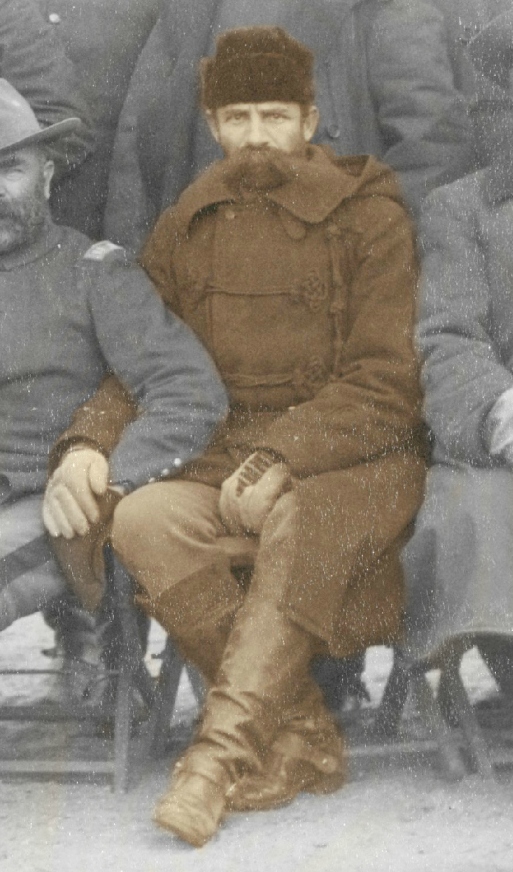
A year after the battle along the Wounded Knee Creek Captain Charles B. Ewing, Assistant Surgeon of the Department of the Platte, addressed the Association of Military Surgeons of the National Guard at St. Louis, Missouri, on April 19, 1892 wherein he provided a detailed description of wounds he treated both on the field of battle and subsequently in the field hospital at Pine Ridge. Ewing was present at Wounded Knee as an observer, and once hostilities began, he provided medical assistance. He later would testify at the Wounded Knee investigation that based on troop positions on the battlefield, it was impossible that soldiers did not wound or kill one another. Following is his description of various types of wounds treated following the battle.
Captain Charles. B Ewing’s Address to the Association of Military Surgeons of the National Guard, at St. Louis, April 18, 1892.
The Great Sioux Indian War of 1890 has been fought so often that I feel an apology is necessary for inflicting it upon you on this occasion, but, while much has been said of the combatants, little as been written of the casualties of which this paper will treat.
The causes which led to this sanguinary hostility are, in brief, “the failure of the government to fulfill its obligations,” and the Messiah delusion, together with a determination of the hostile Sioux not to surrender their arms to the government; this latter more particularly led to the Wounded Knee affair.
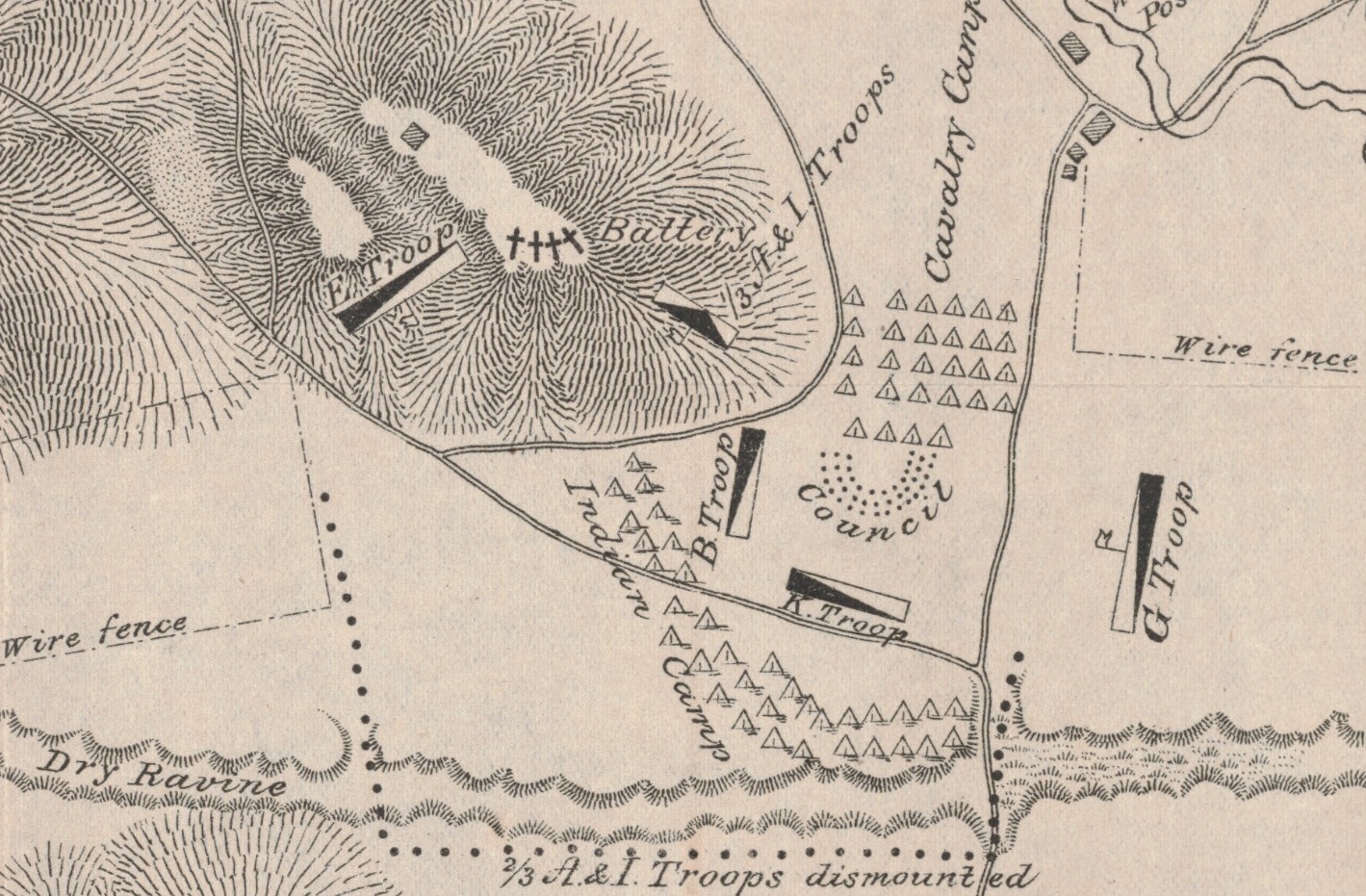
….Everything indicated a peaceful settlement of affairs, when the well-laid plans of Major-General Miles looking to an early and amicable adjustment of trouble were suddenly “frustrated” by the lamentable occurrence at Wounded Knee Creek on the morning of December 29th. The opposing forces were the following: the United States troops were eight troops, seventh Cavalry; Light Battery E, First Artillery, and Company A, Indian Scouts, making a total of 470 fighting men, under the command of Colonel Forsyth, Seventh United States Cavalry. The Indian war party consisted of 106 warriors and 294 women and children, all of the Minneconjous Sioux, under Chief Big Foot.
So many descriptions of this unfortunate affair have been published that I shall limit myself simply to so much of an account as is to be found in the very brief and concise language of my report, made upon request, to the department commander, and in so doing, I ask pardon for using the personal pronoun to the extent that I do, but, inasmuch as a report of my personal services was desired, I was obliged to frame it in the following terms:
Now, to the considerations of the casualties, which I shall separate into the killed and wounded; of the former we had one officer and twenty-nine men, a total of thirty.
The great majority were killed outright, the very few surviving a variable time from a few minutes to a few hours after the reception of their injuries. Captain Wallace, besides the fatal gunshot wound of the lower abdomen, received two cuts with a tomahawk or hatchet; one across the forehead just above the superciliary ridges, and the other conforming to the anterior two-thirds of the surgical suture. In neither case did these cuts fracture the skull.
This officer’s death, coming as it did in the heyday of his career, was indeed a “tragedy.” No words of mine can portray the love and admiration in which he was held by his family, friends and brothers-in-arms.
“His life was gentle; and the elements So mixed in him, that Nature might stand up And say to all the world, ‘This was a man.’”
The greater portion of the dead I saw had received two or more wounds. In order that you may clearly appreciate the treatment of the cases to be presented, I shall premise by stating that my knowledge of them dates from the battlefield, on the morning of December 29, 1890, and ended, so far as three-fourths of them are concerned, upon their transfer to Fort Riley, Kan., January 4, 1891; remaining in charge of those whose condition could not permit of transfer at that time, till a day or two later, on which date I was placed in command of a company of the Hospital Corps.
The wounded consisted of two officers, twenty-nine enlisted men, and one civilian interpreter, attached to the scouts. I shall classify the above, broadly speaking, according to the part of the body injured, leaving out of detailed consideration twelve cases of gunshot wounds, mostly of minor import, which did not come under my care.
Case I. Private H., Troop A, Seventh Cavalry. Pistol-ball entered right side of face half an inch anterior to lower part of right meatus auditorious externus, passing transversely through bones of face and obtaining exit two and one-half inches anterior to lower part of lobule of left ear. Calibre of pistol not known, but from the size of wound of entrance, think it about a 38. Discharge of blood from both ears, and persistent flow of saliva, the latter giving evidence of the wounding of Steno’s duct. A violent cellulitis supervened, which finally subsided under treatment, and he was in excellent shape when transferred.
Case II. Gunshot wound of inferior maxilla. Quartermaster-Sergeant C. C., Seventh Cavalry. Ball entered left inferior angle of chin, passing transversely through body of inferior maxilla, with inclination downward, gaining exit at right inferior angle of chin, crushing and comminuting bone in its passage. Treatment consisted of removing broken particles of bone, with corresponding teeth; stitching the lacerated integument of chin; applying antiseptic dressings; felt splints and bandages to support chin. This man was doing as well as he could under the circumstances when transferred. I understand that he has since had false teeth and plate made.
Case III. Incised wound of nose. Mr. W., Indian interpreter attached to Company E, Indian Scouts, had all that part of nose anterior to nasal bones slashed off with a knife in the hands of an infuriated Indian of Big Foot’s band. The severed part was hanging by a mere shred and bleeding profusely. Fifteen minutes after reception of wound, I replaced nose, and held same in place with numerous silk stitches. This man immediately after the operation, took his Winchester and went at once to the skirmish line, and afterwards on our return to Pine Ridge agency, took his place in the advance with Lieutenant Taylor’s Indian Scouts. I did not see Mr. W. for some days after operation, when I found good union, and removed stitches. This, if it can be so dignified, was the only operation performed on the field.
I now come to Gunshot Wounds of the Body. Under this heading we have five cases:
Case I. Penetrating gunshot wound of chest. Private J. C., trumpeter Troop K, Seventh Cavalry. Ball entered two and one-half inches below and one inch from left nipple toward median line, passed transversely in straight line, gaining exit two and one-half inches below right nipple. No rise of temperature, and patient in good condition when transferred.
Case II. Sergeant L., Troop I, Seventh Cavalry. Ball entered to right of sternum just below clavicle, passed backwards and outwards, obtaining exit at axillary line in the fifth intercostals space, where incision was made, and the ball removed, with pieces of blouse and fragments of undershirt. Pneumonitis followed….
Case IV. Gunshot wounds of vertebrae, upper and lower extremity. Private ____, Troop B, Seventh Cavalry, suffered four distinct gunshot wounds: one passing transversely through lumbar vertebrae from left to right, crushing and comminuting vertebrae and severely injuring the cord and its membranes, and finally lodging in the muscles of the right lumbar region; penetrating gunshot wounds of right and left arms below elbow joints; and the fourth passing through left leg just above ankle joint. It would not be economizing fact very much to say that this man was literally shot to pieces. The bullet which I now exhibit, weighing 385 grs., was removed from the right lumbar region by simple incision, without anaesthetic, immediately after his arrival in the divisional field hospital at Pine Ridge, and, as Nature had not moulded him to resist three ounces of lead in this form and method of distribution, he died shortly afterwards. The injuries of this soldier were so severe that it was hardly expected that he would survive the journey from the battlefield to the field hospital, sixteen miles distant.
Case V. Gunshot wound in neighborhood of right inguinal region. Lieutenant H. H., Light Battery, Second Artillery, received gunshot wound (Winchester) of right side, ball entering just external to anterior superior spine of right ilium and passed downwards and inwards. This officer was in charge of a Hotchkiss gun some six hundred yards distant from a party of hostiles that had gained the shelter of a ravine, and who were beset upon two sides by the fire of carbines and upon the third by Hotchkiss guns. The gun in charge of this officer was moved from its original position upon an eminence to lower ground, so that better range could be obtained, rendering the fire more effective. This was so successful that the Indians sought to silence this particular piece, resulting in the shooting of Lieutenant H. The ball was deflected from its original course, seemingly a fatal one, by a watch worn at the time and which was completely destroyed. I saw Lieutenant H. when shot on the field; he fell under my care that evening at the field hospital; and the same night or the following morning I examined and dressed his wounds, at which time the course of the ball had been fully determined. Having a great deal of work on my hands, I was glad when relieved of this case by another medical officer. I understand Lieutenant H. has so far recovered from his injury as to be able to perform duty.
Let us now consider Gunshot Wounds of the Upper Extremity.
Sergeant H. H., Troop I, Seventh Cavalry, was admitted to the field hospital, Pine Ridge agency, December 29th, from the field where I first saw him. Ball entered just external to coracoids process of scapula, passed through deltoid muscle, finally entering the head of humerus. Severe. This man was treated upon the expectant principle till his transfer to Fort Riley on January 6th, for the following reasons: no appreciable rise of temperature; complained very little of pain; was able to sit up and walk about to a certain extent. Treatment consisted of securing thorough drainage of wound; absolute rest by appropriate position and posterior splints of felt or plaster-of-Paris (I have forgotten which); antiphlogistic regimen; hypodermic administration of morphia when necessary.
I find myself well supported in the above treatment by Billroth, who declares against operative procedures, under like conditions, as follows: “As in cases of resections, you can have no control as regards the prospective functions of the arm, especially when a large portion of bone is to be excised, it is always better for the patient to escape with an anchylosed joint, without resection, than to have a dangling joint after resection.”
Von Langenbeck says: “If it be true that anchylosis of the shoulder-joint enhances the usefulness of the rest of the extremity, and especially of the hand, we would be obliged, in shot-injuries of the shoulder-joint, to constantly strive for the accomplishment of anchylosis. The presumption that anchylosis would bring about greater usefulness of the arm than could be had with a shoulder-joint even with limited motion, rests upon a fallacy, occasioned by neglect to take into consideration the various degrees of severity of shot-wounds of the shoulder-joint.” The same author cites nine successful cases of shot-wounds of the shoulder-joint treated on the expectant plan, the patient in every case recovering, “completely with conservation of good motion of the arm.” He further says: “It is certain that the results of the cases of conservative treatment of shot-wounds of the shoulder-joint above cited challenge greater attention to the side of conservative surgery.”
Two of the cases under this heading were gunshot injuries in the neighborhood of the shoulder-joint, one of them made by a Winchester 38, and the other by a gun of larger caliber. Both cases were given complete rest by means of splints and position; drainage wounds; antiphlogistic regimen, and opium in cases of pain, which complaint was rare.
No symptoms up to the time of transfer to warrant operative interference. I am quite of the opinion, however, that if the temperature, pain, etc., had so indicated, I should at once have made an exploratory incision, and an exsection or amputation, according to the conditions in each particular case; but up to the time of transfer to Fort Riley, there occurred nothing to warrant such procedure.
Gunshot Wounds of Upper Extremity.
Lieutenant G., Troop G, Seventh Cavalry, received a shot which entered olecranon process of right ulna, comminuting that part, passing forwards through shaft, and gained exit at the posterior surface of arm, at junction of inferior with middle third. Treatment consisted of removing portions of bone; applying antiseptic dressings, and supporting arm. This case was turned over to another surgeon the day following his arrival at the field hospital. I have since learned that this officer has rejoined his regiment.
Gunshot Wound of the Right Hand.
Private F. L., Troop B, Seventh Cavalry. Ball entered internal border of wrist, and passing through comminuted bones of same, coming out on palmar surface at base of thumb. Wounds cleansed, dressed antiseptically, and given rest by application of splints. This man was transferred in good condition.
Gunshot Wounds of Lower Extremity, consisting of two of thigh, one of knee and two of leg.
Case I. Private Wm. H. G., Troop C, Seventh Cavalry, while mounted, received a gunshot wound which entered middle of posterior surface of left thigh, at junction of middle with upper third, ranging slightly downward (missed femur), passed forward and inward, obtaining exit at about middle of internal surface. Wounds were cleansed, dressed antiseptically, and when transferred patient was about well.
Case II. Private E. S., Troop C, Seventh Cavalry. Gunshot wounds of right and left thighs. Ball entered inferior surface of left thigh, ranged upward in front of femur, passing out at internal border of anterior surface at junction of middle with upper third; this ball continuing its course entered internal border of posterior surface of right thigh, and ranging transversely behind femur, passed out at middle of upper third of external border of posterior surface. Treatment consisted of thoroughly cleansing wounds, using bichloride of mercury solutions and dressing antiseptically. This man had about recovered when transferred.
Case IV. Private G. E., Troop K, Seventh Cavalry. Gunshot wound of right leg, middle third. This was a very severe compound comminuted fracture of both tibia and fibula, with much destruction of the soft parts, including a division of both anterior tibial and personal arteries. Am of the opinion that this was a case of primary infection. Thirty-six hours after entrance into field hospital it was decided to amputate limb. I performed the operation, assisted by Surgeons Hartsuff and Spencer, United States Army, under rather unfavorable auspices. A Sibley tent with the earth for a floor served as an operating-room, which is very unsatisfactory, inasmuch as your light passes to you through a mere “chink” of a door, and the tripod which supports the central upright pole of the tent permits very little room for the operating table, assistants and tables for antiseptic fluids. Then again, you may sprinkle your floor assiduously with water, yet those moving about run great risk of stirring up clouds of dust. Patient was placed under chloroform and a lateral flap amputation was performed, four inches below knee-point, under antiseptic conditions so far as they could be obtained. Leg was found as described above; flaps were brought together, permitting of the best drainage. Treatment then consisted in supporting patient, and using persistent antiseptic irrigation of the stump, but despite all our efforts, the products of the staphylococcus pyogenes were formed abundantly, and the patient succumbed to pyaemia resulting from a primary infection upon the battlefield.
Now to sum up, we have reviewed: Gunshot wounds of the head, three cases; of the body, eight including the three cases quoted; of the upper extremities, six; and of the lower, four; making a total of twenty-one cases.
The difficulties of the situation, as they appeared to the medical director of the department, Colonel Bache, can be learned by a reference to his own language when he says: “Had that regiment (the Seventh) been operating at a distance from support or organized assistance instead of having a receiving hospital within easy reach, it is not hard to cast the sum of its suffering.”….
This unfortunate battle provoked another hostility upon the following day, in the shape of the White Clay Creek affair. Such, however, was the masterly manner in which that gallant solider, General Miles, controlled the situation, both by his comprehensive knowledge of the art of war as indicated by the disposition of troops and his clear insight into the Indian character, that he prevented what at one time threatened to become a serious Indian war. Peace as well as safety was again assured the settlers of that sparsely populated country, a month after the arrest of Sitting Bull, by the surrendering of nearly 4,000 Sioux Indians at Pine Ridge agency, February 15, 1891. The entire sentiment of the country is well voiced by no less a personage than the President of the United States, in his last annual message, when, in speaking of General Miles, he says, “He is entitled to the credit of having given thorough, protection to the settlers and of bringing the hostiles into subjection with the least loss of life.”
It is not surprising that the casualties of the foe, as well as ourselves were great, when we remember that the fire-arms used were those of largest caliber at close range. The Sioux were armed with three different kinds of guns, namely, Winchester, caliber 38; and the Springfield carbine, caliber 45. The principal weapon was the Winchester, caliber 38, together with very few of the other patterns mentioned.
The United States troops were armed with Springfield carbines, caliber 45; weight of bullet 400 grs., composed of lead and projected by 55 grs. of powder. The wounds resulting from the above were sinous and irregular, with lacerated edges; and the apertures of exit were frequently much larger than those of entrance. Fragments of clothing, splinters and pieces of lead were at times left in the wounds by the bullets, which, when permitted to remain, frequently led to long and obstinate suppurations (as instanced in the Indian wounded), often rendering secondary operations necessary. These bullets, by reason of the malleability of the metal (lead) of which they are made, are expansive; they easily lose their regular form and “mushroom,” readily bursting into fragments upon contact with a hard body. By reason of the above, wounds of blood-vessels are more frequent, and attended with laceration, and the gravest of all dangers to the wounded on the battlefield, haemorrhage. These wounds are further complicated by the splintering and not infrequently the complete shattering of bones.
I am of the opinion that three-fourths of the casualties of the opposing forces were received in what may be termed the “explosive zone” of the projectiles’ trajectories….

 Cavalry Fire Discipline




 Sam Russell





 Army at Wounded Knee