
For conspicuous bravery and good conduct in front of the skirmish line in action against hostile Sioux Indians at
White Clay Creek, S.D.
Not all recommendations for Medals of Honor from the Pine Ridge Campaign of 1890-1891 were approved. Lieutenant Hale was one such example of a recommendation for a Medal of Honor that was disapproved. In the case of Captain Fechét, the recommendation for his actions to rescue the Indian police besieged in Sitting Bull’s camp following that chief’s death was viewed by the Commanding General of the Army as not worthy even of honorable mention in general orders. In the 7th Cavalry Regiment, there were at least two recommendations for Medals of Honor that ultimately were approved for lesser recognition.
During the fight on 30 December 1890 near the Catholic Mission on White Clay Creek, Captain W. S. Edgerly and his troop were in a precarious position while his battalion was attempting to withdraw from the field. Lieutenant W. W. Robinson several years later described the situation, in which G Troop suffered that day’s only fatality among the U.S. troops.
It seems now that the retirement of the 1st Battalion encouraged the Indians in the belief of their strength, and caused them as the 2nd was about to retire, to make quite a vigorous attack upon its left flank. Just as I mounted my horse to retire with the line, I found myself quite fully exposed to the fire of, as I judged, about a dozen Indians on the hills to our left and front, and by one of these shots, Private Clette [sic: Franceschetti] of troop G was killed about ten feet from me.[1]
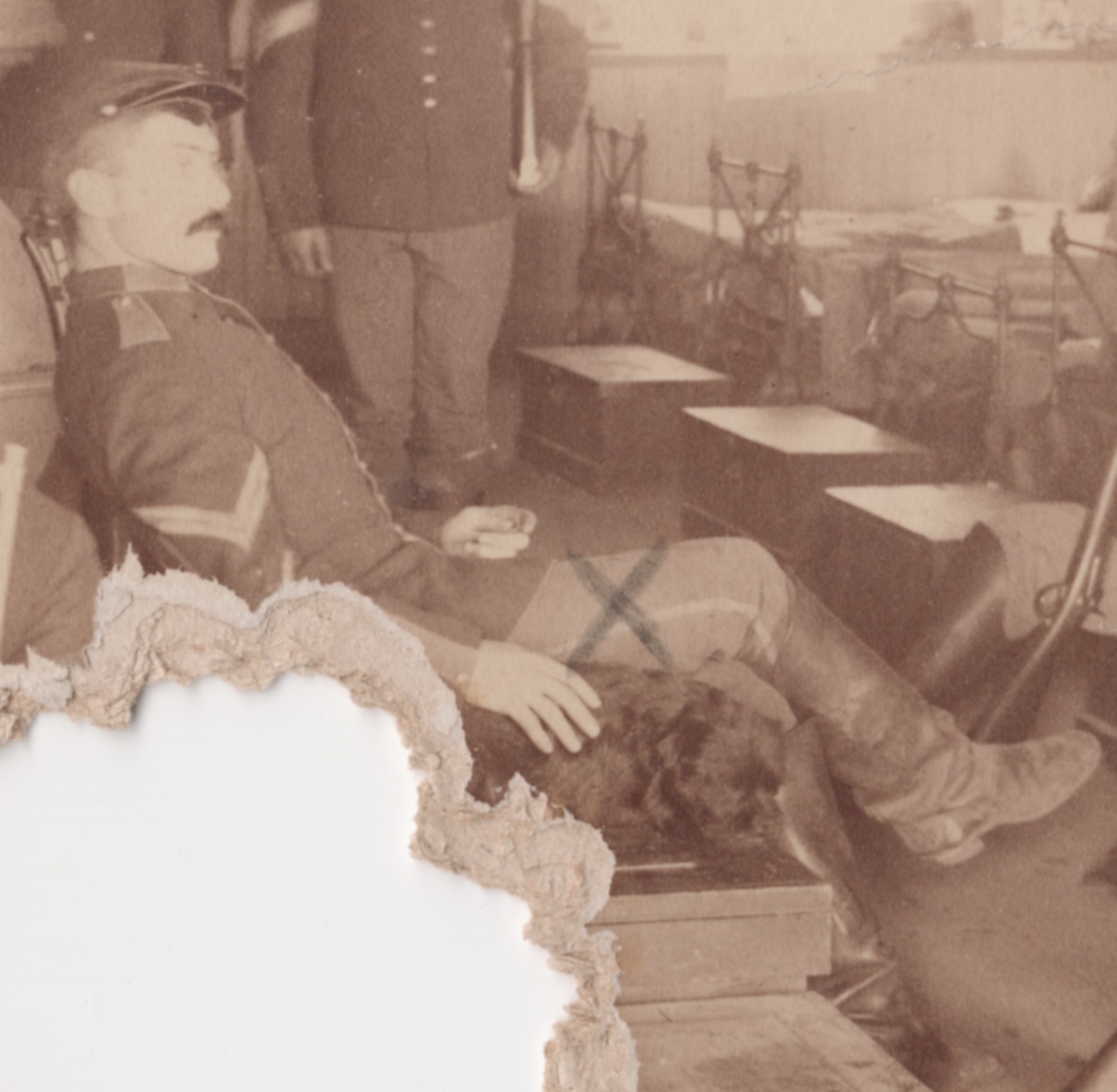
It likely was during this stage of the engagement that two troopers took the initiative. G Troop was apparently in a defilade position, somewhat protected from the Indians’ direct small arms fire. This also meant the troopers could not put direct fire on the Indians. Sergeant Emanuel “Gus” Hennessee and Private Frank Mahoney moved up in front of the skirmish line to the crest of the ridge covering the unit, exposing themselves to the shots of the Sioux Indians firing on the retiring formations. The two soldiers remained in that exposed position for at least ten minutes, each man “doing good service with his carbine,” according to their commander. It was the sergeant’s twenty-seventh birthday. Continue reading

 Sam Russell





 Army at Wounded Knee