General Godfrey’s Recollections of Wounded Knee


I rallied my troop on the hill, dismounted to fight on foot, and posted my men in position.  Large groups were approaching and opened fire on us.

From his retirement home in Cookstown, New Jersey, on May 29, 1931 Brigadier General Edward S. Godfrey, U. S. Army, retired, penned a response to a request from the Chief of the Historical Section of the U.S. Army War College asking for information regarding the engagement at Wounded Knee.  General Godfrey’s letter was printed in full in the January 1935 edition of Winners of the West.  The letter is an outstanding addition to Godfrey’s testimony at the Wounded Knee investigation,  his testimony in the investigation of the killing of a woman and her children near White Horse Creek, and his article, Cavalry Fire Discipline.  Presented below is a portion of the letter in which Godfrey recollects his actual participation in the battle.  I have omitted portions where he summarizes portions of the campaign in which he did not take part.

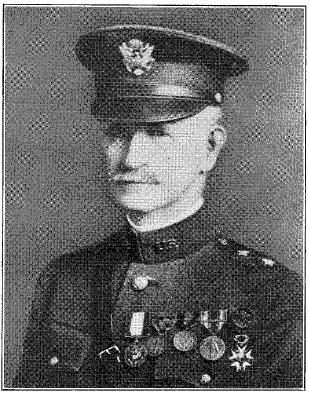
General Edward Settle Godfrey

Edward Settle Godfrey retired in October 1907 upon reaching the age of sixty-four.  President Roosevelt had reluctantly promoted him to brigadier general earlier in that year, but late enough in Godfrey’s career to ensure he would not be promoted to major general.

At the time of the so-called “Ghost Shirt” or “Ghost Dance” unrest at the Sioux Indian agencies in 1890, I was stationed at Fort Leavenworth, Kansas, as a member of the U.S. Tactical Board.  Our work was nearing completion, and when my regiment, the 7th U.S. Cavalry, was ordered to the field, I made application to be relieved and to join my troop.  The application was granted. Upon my arrival at Chadron Creek, I found a detachment of recruits from Jefferson Barracks for the 7th Cavalry and a wagon train of supplies for the troops, awaiting escort.  I assumed command of the detachment and supply train, and about the middle of December arrived at the Pine Ridge agency, where I joined my troop…. Late in the evening of December 28, “To Horse” was sounded at the headquarters of the 7th Cavalry.  The 2nd Squadron (troops C, D, E, and G) and Hawthorne’s section of Hotchkiss guns of Captain Capron’s Battery, 1st Artillery, under Col. J. W. Forsyth, arrived at Whitside’s camp at Wounded Knee about midnight.  Captain Wallace claimed me as his guest, and from him I learned the events of the day and the dispositions of the troops on guard for the night. About 8:00 A.M. December 29, I received orders to take my troop (D) to position.  En route, I passed where there were a number of Indian warriors squatting between two troops (B and K dismounted) and facing inward about a V-shaped formation, the apex next to the Indian village, near which was a small pile of what looked to me like old guns.  My routing took me by two sides of the village, which lay to my left.  On my right was a high ridge overlooking the village, and on this ridge were posted two troops of cavalry and Hawthorne’s section.  I passed down a ravine on a road that led across another and deeper ravine, which I crossed, then turned to the left and reported to Captain Jackson.  I then formed on his left, facing the village and opposite the ridge on which were posted the two troops, mounted, and the artillery as above mentioned.  The deep ravine lay between our line and the village.  Between the ravine and us were Taylor’s Indian scouts and also some dismounted soldiers, who I understood were the night guards not yet relieved.

Inset of Lieut. S. A. Cloman’s map of the battlefield at Wounded Knee depicting the position of Captain Godfrey’s D troop at the outbreak of hostilities.

After we had been there some time, the quiet was suddenly broken by shot, and after a very short interval there came two or three more shots, followed by a continuous fusillade.  At the first shot, I remarked to Lt. S. R. Tompkins, “I’m afraid there has been a mistake.  Too bad.  Too bad.”  The whole village was in commotion, and in a short time the mass of Indians started in our direction.  The troops on the ridge opposite us opened fire on them with small arms and Hotchkiss guns.  As the mass neared the deep ravine, some bullets ricocheted to our position.  I went to Captain Jackson (behind whose troop was a small field, enclosed by a barbed wire fence) and said we ought to change our position and get out of range of our own troops.  Jackson said he thought of taking his troops back of the field.  I told him I would like to take my troop to a hill on my left and rear.  He said, “All right, go ahead.” I rallied my troop on the hill, dismounted to fight on foot, and posted my men in position.  Large groups were approaching and opened fire on us.  I cautioned the men not to shoot at women and children and gave the order to commence firing.  As soon as firing from the groups ended, I gave the order that firing should cease.  The time between the commands seemed incredibly short–probably not more than five minutes, though some firing continued by Jackson’s men. During the firing, I had observed some Indians escaping up the deep ravine.  I sent Lieutenant Tompkins with half my men to take and hold the ravine at all hazards.  There were no more escapes up that ravine after Lieutenant Tompkins got there.  A large dismounted group, however, had assembled in the ravine bordering the upper flank of the village and made their escape over a ridge. Some time after all firing had ceased, Major Whitside came to my position and said a group of Indians had escaped over the ridge, and that Colonel Forsyth sent his compliments and wished me to take my troop and go in pursuit.  I explained that I had sent Lieutenant Tompkins with half of my men, and as there were occasional shots, it seemed to me the ravine should be guarded.  I then asked if I should leave that detachment or take it with me.  Whitside hesitated a moment and then said, “Do as you please.”  I said I would leave it.  I mounted my men (fourteen) and went in pursuit.  I followed the trail for some time beyond the ridge to a wide, open country, but the group had dispersed, leaving no trace. I marched several miles in the general direction indicated by the trend of the trail toward a partly wooded valley, climbed prominent points for observation but saw nothing to indicate the Indians who had escaped. My return march was down a partly wooded valley containing clumps of bushes with dead leaves on them.  In the blizzard two days after the engagement, the dead leaves were blown off.  I put flankers on each side on the ground.  As we entered one of these clumps, the advance discovered some Indians running to a hiding place.  I at once dismounted to fight on foot and called out, “How, cola! Squaw, papoose, cola!”  Hearing no response, and finding that the men were becoming anxious, lest we get into a trap, I instructed each man to advance until he could spot an Indian, but not to fire till I gave the command.  I kept repeating my phrase, “How, cola! Squaw, papoose, cola!” Getting no response, I commanded, “Ready,” and then “Commence firing.” The firing was a volley and was followed by screams and the order to cease firing.  No man fired more than one shot.  I gave the commands, “Forward, march!” and ran to where I heard the screams.  There I found one squaw and two children in the agonies of death and what appeared to be a man, sprawled face down, clothed with civilian clothes and with coat turned over his head, perfectly quiet, and I supposed dead. Just as I was about to leave, Blacksmith Carey, who was one of the flankers, joined me.  As I turned to join my skirmishers, I heard him exclaim, “This man ain’t dead,” and “Bang!” went his gun.  He had turned back the coat tail, discovered a movement, and shot.  I saw that the body was that of a boy whom I judged to be fourteen or fifteen years old, and that he had been shot in the head.  I told Carey to come along and join the skirmish line.  I was shocked by the tragedy, but thought Carey had acted from fright, and the well-known sentiment in the army at that time was to take no chance with a wounded Indian.  Carey was one of the detachment of recruits that I found at Chadron and which joined the regiment with me.  (After stables the next morning, December 30, I had Carey in my tent to question him as to his motive in shooting the boy.  He was very penitent and began to cry, saying he was scared and only thought of self-defense; that he had been warned not to trust a wounded Indian or taken any chances, and that he shot on the impulse of the moment.  Just then “To Horse!” was sounded, and the troop joined the regiment to go to the Drexel Mission affair.  I was perfectly satisfied that Carey was actuated by sudden fear and the instinct of self-defense). Further search revealed no sight of Indians, and I resumed my return march.  Seeing a group of men and horses on a high point, I directed my march to that place.  I found that it was at the head of the ravine at which I had left Lieutenant Tompkins, about one and a half to two miles from the village, and that the group was Troop C. As I was leaving Captain Jackson, I noticed a mounted Indian riding rapidly from the direction of Pine Ridge to a high hill a couple of miles away.  He circled his horse, and a large number of Indians were galloping to join him.  Then he started in our direction on the run.  Satisfied that Jackson did not sense the danger, I called to him to get his horses under cover and prepare for defense, since I was certain that the Indians were going to attack.  I dismounted and deployed my men.  As the leading warriors neared, Jackson’s men, getting into position, opened fire, and then my men, at command, also began firing.  There were probably one hundred fifty or more warriors in this attack.  Captain Jackson sent a courier to the regiment for help.  Captain Edgerly, with his troop, came up and joined in the firing, and soon afterward the Indians withdrew.  We had no casualties in the encounter.  I understood later that this attack was made by Little Wound. On my return to camp, I reported my movements and results to headquarters.  Late in the afternoon, the command and captives started on the return march to Pine Ridge agency.  The captives were hauled in their wagons, and we detailed as rear guard.  Sometime after midnight we arrived at Pine Ridge, where I turned over my prisoners. In the foregoing, I have endeavored to state circumstances relating to acts and facts connected with my troop, D, 7th Cavalry. I do not believe that there was any wanton killing of women and children.  I did not see or hear of any drunkenness at any time at Wounded Knee.

Respectfully submitted, E. S. GODFREY, Brigadier General, U.S.A., Retired.[1]

Much of the country was outraged at the 7th Cavalry’s conduct at Wounded Knee, and Edward Godfrey’s career, more than of James Forsyth or Samuel Whitside, felt the backlash of that outrage.  An article in the New York Sun in 1907 marking the retirement of General Godfrey detailed how Wounded Knee, and likely the tragedy at White Horse Creek, prevented his promotion to higher rank.

Washington, Oct. 9.–One of the most noted of the Indian fighters and frontier scouts in the United States army went on the retired list to-day when Brig.-Gen. Edward Settle Godfrey reached the age of 64 years. He has the distinction also of being one of the last of the high commissioned officers in the army who saw service in the civil war. He served as a private in the Twenty-first Ohio Infantry before he was appointed a cadet at West Point, where he graduated in 1867 and assigned to the Seventh Cavalry. Most of Gen. Godfrey’s active military service was with that regiment in Indian campaigns. Gen. Godfrey won a medal of honor for “most distinguished gallantry in action” against Nez Perces Indians at Bear Paw Mountain, Montana, on September 30, 1877, leading his command into action when he was severely wounded. He was brevetted a Major on February 27, 1890, for military services. He served at the battle of Wounded Knee and his participation in that engagement nearly cost him his life, and cost him, in the estimation of many of his fellow officers, the rank of Major-General. Certain alleged acts in that engagement, for which President Roosevelt held Gen. Godfrey responsible, made the President his unsparing critic in the late years, and he declared on one occasion that Godfrey should never be promoted under the Roosevelt administration. The President relented after much persuasion on the part of Gen. Franklin Bell, the present Chief of the General Staff, and others who were in the Wounded Knee engagement, and promoted Gen. Godfrey from Senior Colonel of the line to Brigadier-General. This promotion was not made, however, until last January. The charge against Gen. Godfrey was similar to that brought against Gen. John J. Pershing, then a Captain, on account of the Moro campaign–that he permitted the killing of women and children unnecessarily in battle. Gen. Godfrey has been vigorously defended against this charge by Gen. Bell and other participants in the engagements. The friends of Gen. Godfrey had hoped that he might be advanced to the rank of Major-General to succeed Gen. McCaskey, whose active service ended last month, to enable him to retire with that rank which they believed he had earned by his long and distinguished services. It was reported that the President had decided to make the promotion, but Gen. Godfrey’s friends were disappointed, for the promotion went to Brig.-Gen. William P. Duvall. A railroad accident just after the battle of Wounded Knee sent Gen. Godfrey to the hospital badly injured. He never recovered entirely from the accident. He participated in the campaign against the Indians in which Gen. Custer was killed and in the expedition which captured Chief Joseph. He was at the Military Academy from 1879 to 1883 as instructor of cavalry. He was commended for special efficiency by the Inspector-General of the army in 1894. The Seventh Cavalry did not go to Cuba during the Spanish-American War, but remained in Arizona. After the close of hostilities and during the military occupation the regiment was sent there, and Gen. Godfrey accompanied it for a brief service. He is at present in command of the mounted service school at Fort Riley, Kansas.[2]

Brigadier General Edward Settle Godfrey and his second wife, Ida Emley, are buried in section 3 of Arlington National Cemetery.[3]

Endnotes.
[1] Peter Cozzens, ed., Eyewitnesses to the Indian Wars, 1865-1890, (Mechanicsburg: Stackpole Books, 2004), 615-619.
[2] Associated Press, “Brig. Gen. Godfrey Retired,” The Sun (New York: 10 Oct 1907), 2.
[3] Anne Cady, “Edward Settle Godfrey,” FindAGrave (http://www.findagrave.com/cgi-bin/fg.cgi?page=gr&GRid=5864258) accessed 23 May 2014. Uploaded 9 Dec 2010.

Citation for this article: Samuel L. Russell, “General Godfrey’s Recollections of Wounded Knee,” Army at Wounded Knee (Sumter, SC: Russell Martial Research, 2013-2014, http://wp.me/p3NoJy-7f), posted 8 Feb 2014, accessed __________.
Posted in Officers, Reminiscences | Tagged , , , , , , , , , , , , , , , , | 4 Comments

D Troop, 7th Cavalry Regiment Muster Roll


Muster Roll of Captain Edward S. Godfrey’s Troop D of the Seventh Regiment of Cavalry, Army of the United States, (Colonel James W. Forsyth,) from the 31st day of October, 1890 to the 31st day of December, 1890. [Names in bold are believed to have been present at the battle of Wounded Knee.  Those annotated with * were wounded in action, those annotated with § were killed in action or died of wounds. There were no soldiers in Troop D awarded the Medal of Honor or the Certificate of Merit.]

Captain Godfrey, Edward S.: On detached service at Leavenworth, Kans., since Apr. 1, 89, as a member of the tactical board, per Special Order #68 Headquarters  of the Army Adjutant General’s Office Mch. 23, 89. Relieved from duty as a member of the tactical board Nov. 28, 90 per Paragraph Special Order #278 Headquarters  of the Army Adjutant General’s Office Nov. 28, 90. Rejoined Troop at Camp at Pine Ridge Agency, S. D. Dec. 6, 90. Resumed command of Troop Dec. 7, 1890. [LBH]

First Lieutenant Robinson, William W.: In command of Troop from Feb. 2, 89 to Dec. 6, 90. Sick in quarters from Dec. 12, 90 to Dec. 14, 90. Disease “acute bronchial catarrh” contacted in line of duty. On special duty in command of Troop K, 7th Cavalry since Dec. 30, 90 per verbal orders of the Regimental Commander.

Second Lieutenant Tompkins, Selah R. H.: On duty with Troop.

First Sergeant Gunther, Herman: Enlisted on May 29, 1889 at Fort Riley, Kansas, by Lieut. McCormick.  Sick in quarters from Oct. 31, 90 to Nov. 2, 90. Disease “rheumatism muscular” contracted in line of duty.

Sergeant Light, Harry W.: Enlisted on June 24, 1890 at Fort Riley, Kansas, by Lieut. McCormick.  Absent sick at Song Pine, Neb. since Nov. 25, 90. Disease “Typhoid Fever” contracted in line of duty. Rejoined Troop for duty at Camp at Pine Ridge Agency, S. D. Dec. 13, 90.

Sergeant Burnett, Zachariah H.: Enlisted on May 23, 1889 at Fort Riley, Kansas, by Lieut. McCormick.

Sergeant Stevens, Isaac: Enlisted on August 27, 1887 at Fort Leavenworth, Kansas, by Lieut. Paddock.

Sergeant Conners, Michael: Enlisted on March 12, 1886 at Fort Meade, Dakota Territory, by Lieut. Varnum.  On extra duty in the Quartermaster Department (as Trainmaster) from Dec. 22, 89 to Nov. 23, 90 per Paragraph IV Order #263 Fort Riley, Kans. Series 1889.

Sergeant Gerhardt, Otto: Enlisted on September 10, 1886 at St Louis, Missouri, by Capt. Ellis. Continue reading

Posted in Muster Rolls | Tagged , , , , , , , , , , , , , , , , , | Leave a comment

Second Lieutenant Thomas Quinton Donaldson, C Troop, 7th Cavarly


One of these bucks I took a rifle from; he was lying under a squaw’s blanket with her, and had evidently tried there to shield himself while firing ; both were dead.

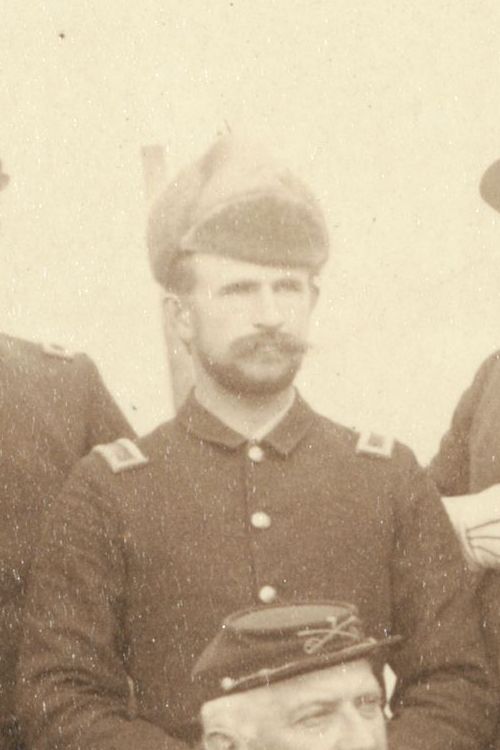
Second Lieutenant Thomas Q. Donaldson, Jr., C Troop, 7th Cavalry, at Pine Ridge Agency, 16 Jan. 1891. Cropped from John C. H. Grabill’s photograph, “The Fighting 7th Officers.”

Second Lieutenant Thomas Q. Donaldson, Jr., C Troop, 7th Cavalry, at Pine Ridge Agency, 16 Jan. 1891. Cropped from John C. H. Grabill’s photograph, “The Fighting 7th Officers.”

Lieutenant T. Q. Donaldson was one of the youngest officers in the Regiment at Wounded Knee.  The twenty-six-year-old South Carolinian had been with C Troop since joining the regiment at Fort Riley in September 1887 following graduation from the United States Military Academy.[1]  He provided concise testimony at the military investigation of Wounded Knee on 9 January 1891 wherein he detailed his role in the battle and focused on measures taken to avoid killing women and children.

Inset of Lieut. S. A. Cloman’s map of Wounded Knee depicting the position of C and D Troops, December 29, 1890.

Inset of Lieut. S. A. Cloman’s map of Wounded Knee depicting the position of C and D Troops, December 29, 1890.

I was located behind the 1st platoon of G Troop as located on the map on the 29th of December, 1890.  That after this firing commenced my platoon was separated from the other platoon on account of a wire fence which was behind us.  I took my platoon around this fence to a ravine in the rear and dismounted it to fight on foot, and placed the horses under cover of the ravine entirely out of fire, and started my men on foot towards some bucks and squaws who were firing (a number of Indians were firing from this party).  As I did so, there were 6 or 7 squaws came running up to me and evidently implored me not to kill them.  I pointed to the horses in the ravine, and they went down there and I told the corporal left with the horses to take care of them.  After the firing from this Indian line had ceased, I went up there with my men.  I saw a number of dead Indians lying around several bucks among them.  One of these bucks I took a rifle from; he was lying under a squaw’s blanket with her, and had evidently tried there to shield himself while firing; both were dead.  I had repeatedly ordered my men not to fire on squaws, and this order was obeyed throughout the day.[2]

Ernest Garlington in his The Seventh Regiment of Cavalry stated that, “Lieutenant Donaldson was struck by a bullet with sufficient force to penetrate his leather belt and his clothing.”[3]  The bullet apparently did not enter the officer’s body, as Donaldson was not reported wounded at either Wounded Knee or White Clay Creek.

Thomas Quinton Donaldson, Jr., was born on 26 June 1864 at Greenville, South Carolina, the second son of Thomas Q. and Susan B. Donaldson.  The senior Thomas was a native South Carolinian, the son of Nimrod and Sarah (McCullough) Donaldson.  He was a well educated man and became a lawyer in 1855.  In 1859 he married fellow Greenville native Sarah Barbara Hoke, the twenty-three-year-old daughter of David and Nancy (Bivings) Hoke.  Thomas enlisted in April 1861 in B Company, 2nd Palmetto Regiment, where he served as a corporal until May 1862 when he resigned due to failing health.  He served out the remainder of the war as the collector of war tax for Greenville County. Following the war, Thomas ran a private law practice and was elected to the state legislature in 1872.  Thomas and Susan had four children: Augustus Hoke, born in 1860, was a practicing attorney in Greenville and died in 1927; Thomas Quinton, Jr., the subject of this post, was born in 1864; Sarah E., born in 1869, married Albert Barnes, and died in 1949; and Nancy H., born in 1872, married Davis Furman and died in 1960.  The patriarch, Thomas Q., Senior, died in 1912, seven years after the death of his wife, Susan.[4]

Of Thomas Quinton Donaldson, Jr.’s life and career, a fellow West Point alumnus wrote the following necrology:

Young Donaldson attended the local schools of his native town and later went to the Patrick Military Institute in Greenville, South Carolina. After being there some two years, he learned that the students were to be given an opportunity to compete for a West Point cadetship. He entered this contest and won the appointment.
He reported at the Military Academy on August 28, 1883, and was admitted as a cadet to date from September 1. There were thirty-one other “Seps” with him; so he did not lack company during the period of his change from a “Sep Plebe” to a real “Plebe”.
His classmates adopted the abbreviation T. Q. as his nickname soon after his arrival, and this stuck to him throughout his military career.
His life at West Point was much like that of his comrades. He was highly studious and very religious. He had a fine sense of humor and enjoyed to the full the many amusing incidents that happened during the four-year grind at the Academy. He graduated in 1887, number 34 in a class of 64.
His first assignment was to the 3rd Cavalry, but this was changed while he was on graduation leave, and he joined the 7th Cavalry at Fort Riley, Kansas, in September, 1887.
At this time, Colonel (afterwards Major General) James W. Forsyth was commandant of the School for Cavalry and Light Artillery and Lieutenant (afterwards Major General) J. Franklin Bell was his aide. With two such able men at the helm, the school was coming rapidly into prominence and it was amid these scenes of activity and efficiency that young Donaldson began his service in the Regular Army.
Three years later (1890-91), he accompanied his regiment in the Wounded Knee Campaign and, after several engagements, was slightly wounded at White Clay Creek, South Dakota. [This statement is not substantiated by the official record.]
He became [Professor of Military Science and Tactics] of Patrick Military Institute in 1892 and on October 26 of that year married Miss Mary Elizabeth [Willson], daughter of the Reverend John [Owen Willson], D. D., President of Landor College of Greenville, South Carolina. Later, he was appointed [Professor of Military Science and Tactics] at the Clemson Agricultural College, at Fort Hill, South Carolina. He received his promotion to First Lieutenant in January, 1895.
It was not long after the conclusion of his detail at Clemson College that the Spanish-American War came on. Young Donaldson had been assigned previously to the 8th Cavalry, which he joined in time to accompany it to Cuba. The regiment returned to the United States in 1900, with station at Fort Riley, Kansas.
He was Post Quartermaster at Fort Riley at the time he received his Captaincy which was February 2, 1901. He accompanied his regiment to the Philippine Islands and remained for two years, 1905-1907.
Captain Donaldson went in for rifle-firing, even before he went to West Point, and finally became a very distinguished shot. During the period from 1888 to 1907 he was a member of various Department, Division, Army and National Cavalry Carbine and Rifle Teams.
The ideas about military education which T. Q. had absorbed at West Point and later, upon joining the School for Cavalry and Field Artillery had never been forgotten. So in 1908, he obtained a detail as a student to the Army School of the Line. He finished his year there as a distinguished graduate and then took the course at the Army Staff College, graduating in 1910. He received his Majority the next year and then followed several years on troop duty.
In 1915, T. Q. was detailed in the Inspector General’s Department. His long experience with the Line of the Army had well fitted him for this type of duty. He was promoted to Lieutenant Colonel on July 1, 1916, and received his Colonelcy twelve days later.
The World War came on nine months later, and, on February 18, 1918, Colonel Donaldson was promoted to Brigadier General, National Army. Six months after this, he went to France and became Inspector General of the [Service of Supply], at Tours, which position he filled with such distinction that, not only did he receive the [Distinguished Service Medal], but also the French Government decorated him with the Cross of the Legion of Honor.
In June, 1919, he was returned to the grade of Colonel but remained on duty in the Inspector General’s Department. It was the next year that he investigated the circumstances attending the escape of the draftdodger, Grover Cleveland Bergdoll, and his report on that disgraceful affair is a classic.
After duty for a while as a member of the General Staff in the feverish after-the-war atmosphere and, later, with troops, he was appointed a Brigadier General in the Regular Army and ordered to the Philippine Islands (1925). He remained for two years as Commander of the 23rd Infantry Brigade at Fort William McKinley.

Maj Gen T Q Donaldson

Upon his return to the United States, he was assigned to command of the 16th Infantry Brigade with station at Washington, D. C. On December 11, 1927, he was promoted to Major General and assigned to the First Division, Fort Sam Houston, Texas. Later, he became Commanding General of the 8th Corps Area, which position he held until his retirement for ill health in June 26, 1928. [His retirement date is his sixty-fourth birthday indicating that he retired of age by law, not for ill health].  From that time, he was an invalid and spent the greater part of his remaining days in various hospitals. He died October 26, 1934, at the Veteran’s Hospital, Fast Northport, Long Island, New York.
He is survived by Mrs. Donaldson and by two sons and a daughter. One son, Augustus [Hoke] is in business in New York [and Naval Academy class of 1920]. Another son, Thomas Q., Jr., is a Captain in the 8th Cavalry [and Military Academy class of 1918]. [Mary] Sue, his daughter, is married to Major Casper B. Rucker, Infantry, General Staff, San Antonio, Texas.
Another son, John [Owen], served in the Aviation Branch during the World War with distinction. He was the 4th ranking American Ace, having brought down eight German planes and a German balloon. Shortly before the armistice he and his companion were forced down in Belgium and captured by the Germans. After several days’ imprisonment they escaped and, after nineteen days of almost incredible adventures, they reached Holland. The signing of the armistice enabled them to rejoin the American forces in London. [He was a recipient of the Distinguished Service Medal and the Silver Star Citation.] Later, John O. resigned from the Army and entered aviation in civil life. He was killed when his plane crashed about seven years ago.
T. Q. Donaldson was a kind and indulgent father and husband and an active, useful and distinguished officer. His family may well be proud of him. The members of the Class of 1887 who survive him were and still are conscious of his outstanding ability and will remember him always. May he rest in peace amid Arlington’s beautiful hills.[5]

Major General Thomas Q. Donaldson and his Wife, Elizabeth Willson, are buried at Arlington National Cemetery.[6]

Endnotes

[1] George W. Cullum, Biographical Register of the Officers and Graduates of the U.S. Military Academy vol. 3 (Boston: Houghton, Mifflin and Company, 1891), 411.
[2] Jacob F. Kent and Frank D. Baldwin, “Report of Investigation into the Battle at Wounded Knee Creek, South Dakota, Fought December 29th 1890,” in Reports and Correspondence Related to the Army Investigations of the Battle at Wounded Knee and to the Sioux Campaign of 1890–1891, the National Archives Microfilm Publications (Washington: The National Archives and Records Service, General Services Administration, 1975), Roll 1, Target 3, Jan. 1891, 696.
[3] Major E. A. Garlington, “Seventh Regiment of Cavalry,” The Army of the United States: Historical Sketches of Staff and Line with Portraits of Generals-in-Chief, Theodore F. Rodenbough and William L. Haskin, eds., (New York: Maynard, Merrill & Co., 1896), 266.
[4] NARA, Washington D.C.; U.S. Passport Applications, Hawaii, Puerto Rico and Philippines, 1907-1925, Collection Number: ARC Identifier 1244181 / MLR Number A1 542, Box #: 4250, vol. 6; Yates Snowden and Harry Gardner Cutler, History of South Carolina, vol. 5 (The Lewis pub. co., 1920), 257 – 259; NARA, Carded Records Showing Military Service of Soldiers Who Fought in Confederate Organizations, compiled 1903 – 1927, documenting the period 1861 – 1865, Catalog ID: 586957, Record Group #: 109, Roll #: 154; Hunting For Bears, comp.. South Carolina Marriages, 1641-1965 [database on-line]. Provo, UT, USA: Ancestry.com Operations Inc, 2005, Source: South Carolina Magazine of Ancestral Research, Vol 11, #2, 4; Ancestry.com, 1850 United States Federal Census [database on-line], Provo, UT, USA: Ancestry.com Operations, Inc., 2009, Year: 1850, Census Place: Eastern Subdivision, Anderson, South Carolina, Roll: M432_848, Page: 276A, Image: 558; Year: 1860, Census Place: Greenville, Greenville, South Carolina, Roll: M653_1220, Page: 402, Image: 159, Family History Library Film: 805220; Year: 1880, Census Place: Greenville, Greenville, South Carolina, Roll: 1230, Family History Film: 1255230, Page: 60A, Enumeration District: 081; Year: 1900, Census Place: Greenville Ward 6, Greenville, South Carolina, Roll: 1529, Page: 6A, Enumeration District: 0037, FHL microfilm: 1241529; Year: 1910, Census Place: Greenville Ward 6, Greenville, South Carolina, Roll: T624_1461, Page: 5B, Enumeration District: 0032, FHL microfilm: 1375474Obituary Index of the Greenville News, Greenville County Library System, http://www.greenvillelibrary.org/index.php/Obituary-Index.html.
[5] N. F. M., “Thomas Quinton Donaldson, No. 3207, Class of 1887,” in Sixty-sixth Annual Report of the Association of Graduates of the United States Military Academy at West Point, New York June 11, 1935 (Newburgh: The Moore Printing Company, Inc., 1935), 140-142; R. F. Good, The 1920 Lucky Bag: The Annual of the Regiment of Midshipmen, United States Naval Academy (Copyright 1919), 44; NavSource Naval History, http://www.navsource.org/archives/06/039.htm accessed 1 Feb 2014.
[6] Paul Hays, photo., “Thomas Quinton Donaldson, Sr,” FindAGrave, http://www.findagrave.com/cgi-bin/fg.cgi?page=gr&GRid=49174252 accessed 1 Feb 2014.

Citation for this article: Samuel L. Russell, “Second Lieutenant Thomas Quinton Donaldson, C Troop, 7th Cavarly,” Army at Wounded Knee (Sumter, SC: Russell Martial Research, 2013-2014, http://wp.me/p3NoJy-qA), posted 1 Feb 2014, accessed __________.

Posted in Officers | Tagged , , , , , , , , , , , , , , | 3 Comments